25 ★ J remains provisional
No tail serial, unit, crew or aircraft-specific wartime history will be invented simply to make the marking look complete.

Flagship Restoration · Aircraft Bay
A one-third-scale Balsa USA airframe being preserved, reconstructed and returned to flight as a carefully documented U.S. Army liaison aircraft in a Normandy-period presentation — with restoration choices, modern systems and unresolved history kept visibly separate.
Three Ways Into the Story
The L-4 bay serves casual visitors, builders, historians and contributors without forcing everyone through the same long technical narrative.
What arrived, what survives, what must be rebuilt, and what the finished Grasshopper is intended to become.
A chaptered journey through evidence, structure, systems, finish, release preparation and eventual flight.
Normandy context, provisional markings, verified evidence and unresolved questions preserved without invention.
Aircraft Record
The project record separates aircraft fact, restoration choice and future implementation so an old plan or enthusiastic “lock” never outranks the current physical aircraft.
Image note: the hero is presentation imagery. It is not being used as physical as-received proof of Jon's acquired airframe.
As Received · Existing Aircraft
These photographs document the acquired model as it entered the restoration record. They show existing condition and markings—not the planned final presentation.
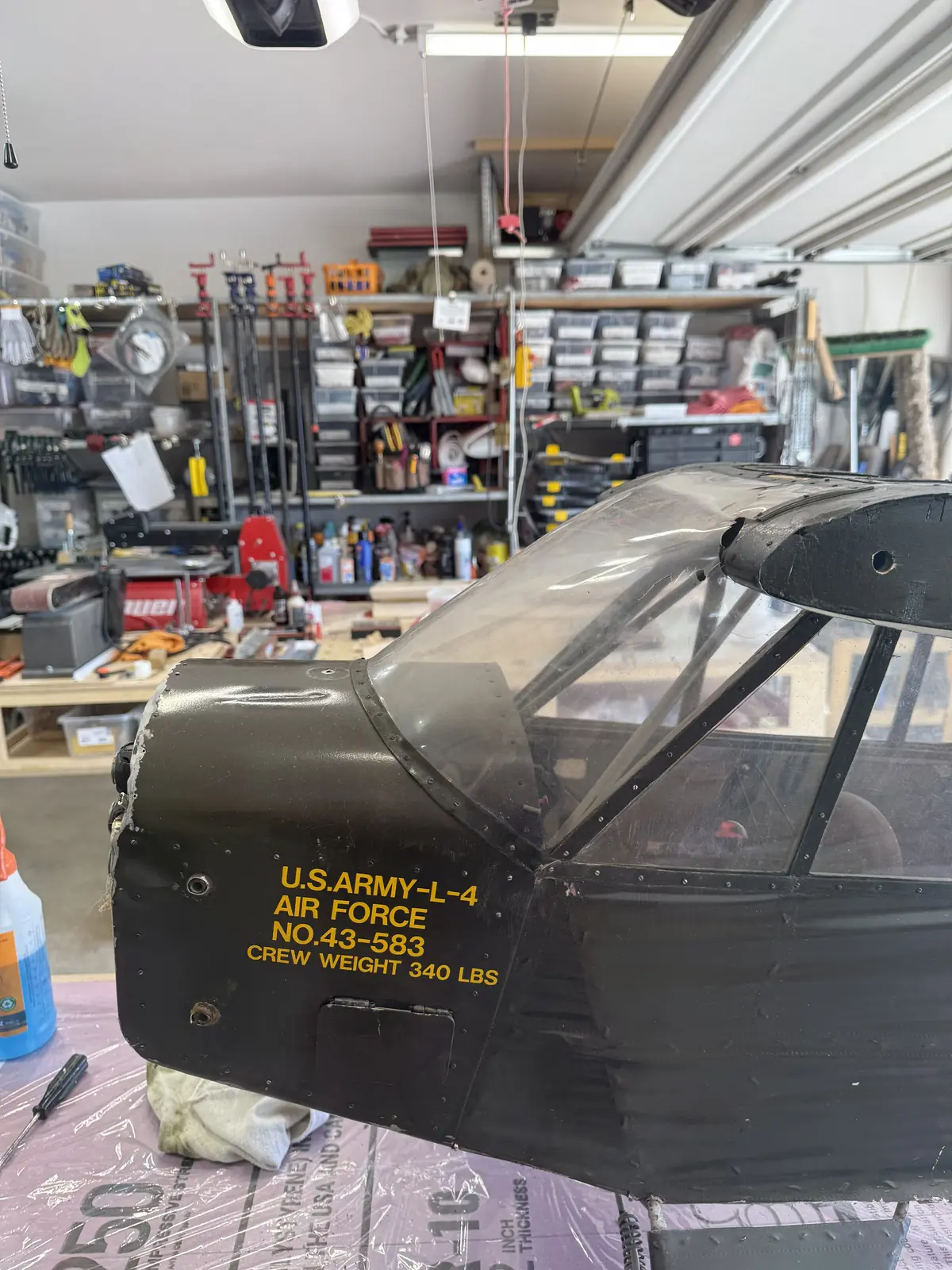
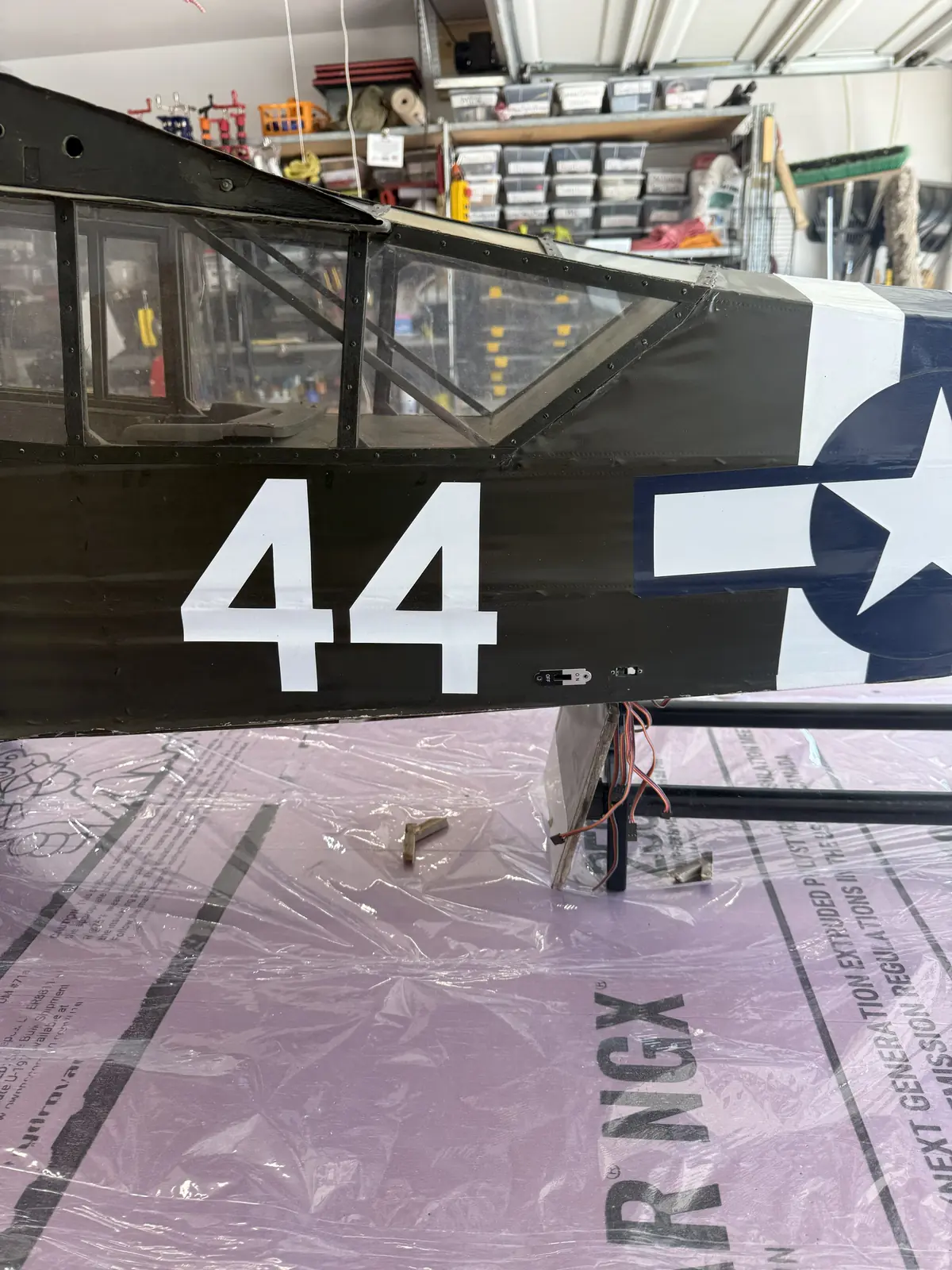
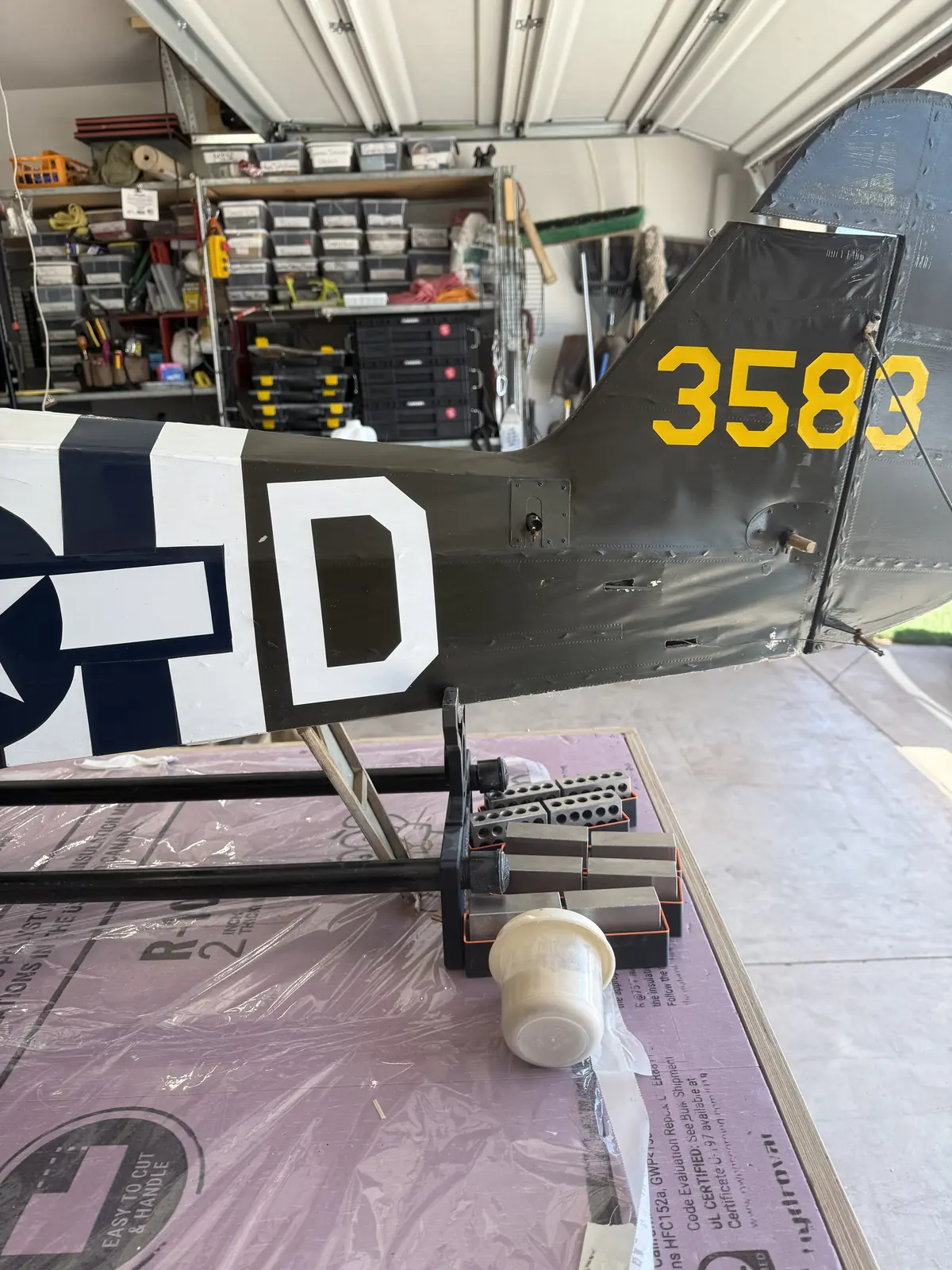
Evidence status: existing-aircraft documentation. The original full-resolution photographs remain preserved separately from these web-prepared copies.
Restoration Philosophy
This is not a redesign exercise. Sound original construction remains. Existing geometry and developed details are documented and replicated where appropriate. Changes must earn their place through safety, authenticity, durability or serviceability.
Document first. Photograph, measure and label before removal or reinterpretation.
Repair surgically. Keep sound structure rather than replacing it for convenience.
Separate eras. Modern flight systems remain operational enhancements, not invented wartime equipment.
Keep access. A restoration that cannot be inspected or serviced is not finished.
Governing rule: never discard, alter or reinterpret an original part before it has been photographed, measured, labeled and recorded.
Historical Record
The chosen presentation is a U.S. Army L-4 operating in Normandy during June through early July 1944. That framework guides markings, invasion stripes, field character and the questions still open.
No tail serial, unit, crew or aircraft-specific wartime history will be invented simply to make the marking look complete.
Period photographs and unit records can establish environment, equipment and practice without proving the identity of the represented aircraft.
Full-scale drawings help explain the type; Balsa USA plans and the existing model govern this restoration's geometry unless a documented restoration decision says otherwise.
Historical context can be strong and useful without being misrepresented as aircraft-specific evidence.
Truth Standard
These labels distinguish evidence from interpretation so visitors can understand whether they are seeing history, existing-aircraft fact, restoration choice or modern enhancement.
Supported strongly enough for public presentation as fact, with the source retained.
A well-supported interpretation that still carries a clearly stated uncertainty.
An important possibility or research lead preserved without forcing it into a conclusion.
Restoration Journey
The current work remains restoration, fabrication, systems integration and release preparation. Testing and flight are a future release phase, not the present status.
Open chapters
01As ReceivedThe covered aircraft, reusable parts, damage and original builder's choices.Open02Teardown and DiscoveryStructure exposed, defects mapped, evidence preserved and decisions classified.Open03Greenhouse, Doors and GlazingExisting configuration, 0.040-inch PETG, framing, strips and latches.Open04Fuselage ReconstructionLower structure, belly access, load paths, cockpit supports, firewall and nose.Open05Rear Fuselage, Tail and EmpennageTail structure, stabilizer, elevators, fin, rudder, tailwheel and controls.Open06Wings and AileronsInspection, repair, hinges, servos, struts, wiring and pitot planning.Open07Cockpit RestorationVisible scale presentation combined with concealed modern service access.Open08Electronics, Redundant Power and TelemetryRB25S direction, dual LiFe power, open receiver architecture, owned sensor capability and failover testing.Open09Electric Propulsion12S-class planning for low-speed pull and power in reserve; matched hardware remains open.Open10Koverall and Normandy FinishFabric structure, controlled shrink, finish weight, stripes, markings and historical discipline.OpenFuture release phase
Long-term preservation
Connections and Boundaries
Aircraft-specific evidence, type history, restoration choices and modern systems can all appear on one site without masquerading as one another.
A promising marking candidate retained as provisional. No tail serial, unit, crew or aircraft-specific history will be invented to complete it.
Help complete the record →Tinker Air Force Base records state that 241 L-4 aircraft passed through Oklahoma City maintenance lines from January 1947 through June 1953. This is type history — not proof that the represented aircraft passed through Tinker.
Redundant receiver power, telemetry, electric propulsion and any eventual stabilization are operational enhancements. They are concealed where practical and never presented as wartime equipment.
Open the systems chapter →The Record Is Not Complete
Official records tell only part of the story. Photographs, family papers, logbooks, memories, captions, unit knowledge and corrections may reconnect an aircraft to the people, places and missions around it.
Aircraft codes and serials
Pilot, observer or ground-crew names
Unit and battalion information
Airfields, dates and mission context
Family photographs and recollections
Corrections supported by sources
Across the Hangar
Move into structure, electronics, fabrication, records or field preparation without losing the aircraft-centered path.
Structure, restoration, tools and methods.
Enter →Radio, power, telemetry, lighting and testing.
Enter →Fixtures, prototypes, scale parts and materials.
Enter →Project Bibles, drawings, manuals and references.
Enter →Ground release, maiden program and flight reports when the aircraft reaches that evidence state.
Enter →Milestones, design concepts, friends, clubs, fields and flying.
Enter →