Record
Finding Number
A permanent identifier follows the issue from discovery through repair and final inspection.
L-4 Restoration · Chapter 02
Once the covering was removed, the aircraft stopped hiding its history. Sound structure, failed joints, earlier repairs, weakened hardpoints, missing components, and major reconstruction zones could finally be separated and recorded.
This chapter turns exposed wood and hardware into a controlled restoration map before any repair work begins.
Review the Survey Back to the JourneyDiscovery evidence
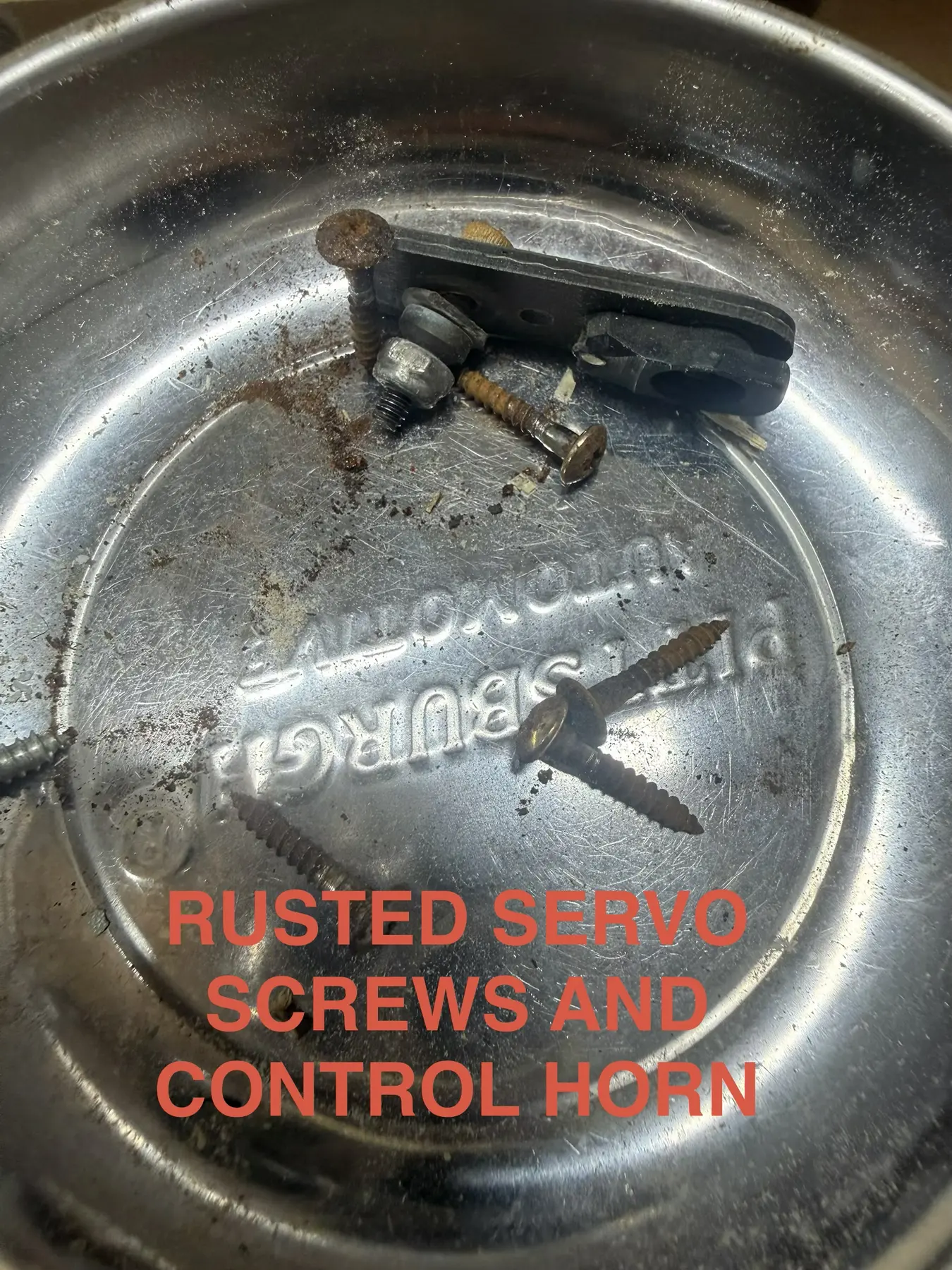
Removed fasteners and control hardware are kept long enough to record corrosion, wear, original placement and the replacement need they establish.
The Exposed Aircraft
The restoration does not begin by removing fabric again. Before-and-after photographs already document the transition from the covered aircraft to the exposed structure. Those matched views are the bridge between appearance and condition.
With the airframe open, every important area can be inspected directly: glue joints, longerons, cross-members, ribs, spars, hardpoints, earlier patches, hinge lines, control exits, landing-gear mounts, firewall connections, and the complete rear-fuselage structure.
Controlled Inspection
Each meaningful finding receives a number, an aircraft location, photographs, a brief description, and a proposed disposition. The map prevents a visible crack from receiving attention while a hidden load-path problem is forgotten.
A permanent identifier follows the issue from discovery through repair and final inspection.
Left, right, top, bottom, bay, station, rib, spar, longeron, or fitting location is stated clearly.
Preserve, clean, reglue, reinforce, replace locally, rebuild completely, or retain as reference only.
What the Inspection Looks For
Fuselage Survey
The cabin and central fuselage contain valuable original construction that should remain wherever it is sound. The inspection concentrates on the lower longerons, landing-gear load path, belly-hatch openings, cockpit supports, firewall attachments, battery and equipment areas, rear fuselage, and tail mounting structure.
Blue tape and other repair markings are treated as status indicators, not as the repair itself. Each marked area is tied back to photographs and a written finding before the tape is removed or the structure is altered.
Cabin geometry, major framework, greenhouse supports, firewall position, and useful original fittings.
Wing Surveys
The wings appeared generally good, but neither wing is approved merely because the overall structure looks intact. Each receives its own inspection record covering spars, ribs, cap strips, root structure, strut hardpoints, leading and trailing edges, tips, aileron structure, hinge areas, servo installations, hatches, and wiring passages.
Independent photograph set, defect list, repair decisions, and final inspection record.
Independent photograph set, defect list, repair decisions, and final inspection record.
Wing-root connectors, PAS70 pitot installation, protected tubing, servo access, and concealed future wiring.
Tail and Empennage
The existing stabilizer, elevators, fin, and rudder remain valuable because they show size, outline, hinge relationships, joiner locations, and earlier construction choices. They do not remain in service merely because they can be patched.
The rear fuselage is jigged straight before reconstruction. A centerline and datum establish the new tailpost, stabilizer platform, fin support, bracing, lower framework, and control geometry. All four empennage surfaces are rebuilt from the Balsa USA plans.
Evidence Preservation
Old glazing, retired hardware, damaged tail parts, control pieces, fasteners, templates, and previous repairs may contain the only surviving evidence of a hole pattern, bracket position, panel shape, color layer, or assembly method.
Important items are photographed, labeled, measured, and retained in the appropriate historical or reference collection. Ordinary teardown photographs remain organized by aircraft area; only intentionally retained artifacts move into the historical-items record.
Geometry Authority
The controlling authority for airframe geometry, alignment, incidence, and reconstructed structure.
The authority for its received configuration, builder choices, reusable parts, and model-specific relationships.
The authority for full-scale appearance and supported authenticity improvements that do not require unnecessary redesign.
A historical photograph does not override the model's structural geometry, and the received model does not override the plans where reconstruction is required. Each source answers a different question.
Inspection Outcome
Continue the Story
The teardown record defines what is sound, what must be rebuilt, and what evidence must be retained. The next visitor chapter will focus on the developed greenhouse, doors, glazing, latches, and the decision to preserve its configuration while replacing the aged clear material.
Return to the Journey