Preserve
Sound greenhouse framework, major geometry, panel arrangement, openings, usable original fittings, and reliable attachment structure.
L-4 Restoration · Chapter 03
The L-4's greenhouse is one of the aircraft's defining features. On this model, it is also a developed installation that records the original builder's framing, panel arrangement, door geometry, retaining strips, hinges, latches, and attachment choices.
The restoration preserves that configuration as the baseline. It will be repaired, faithfully replicated, and selectively enhanced—not replaced with an unrelated redesign.
Existing-aircraft record
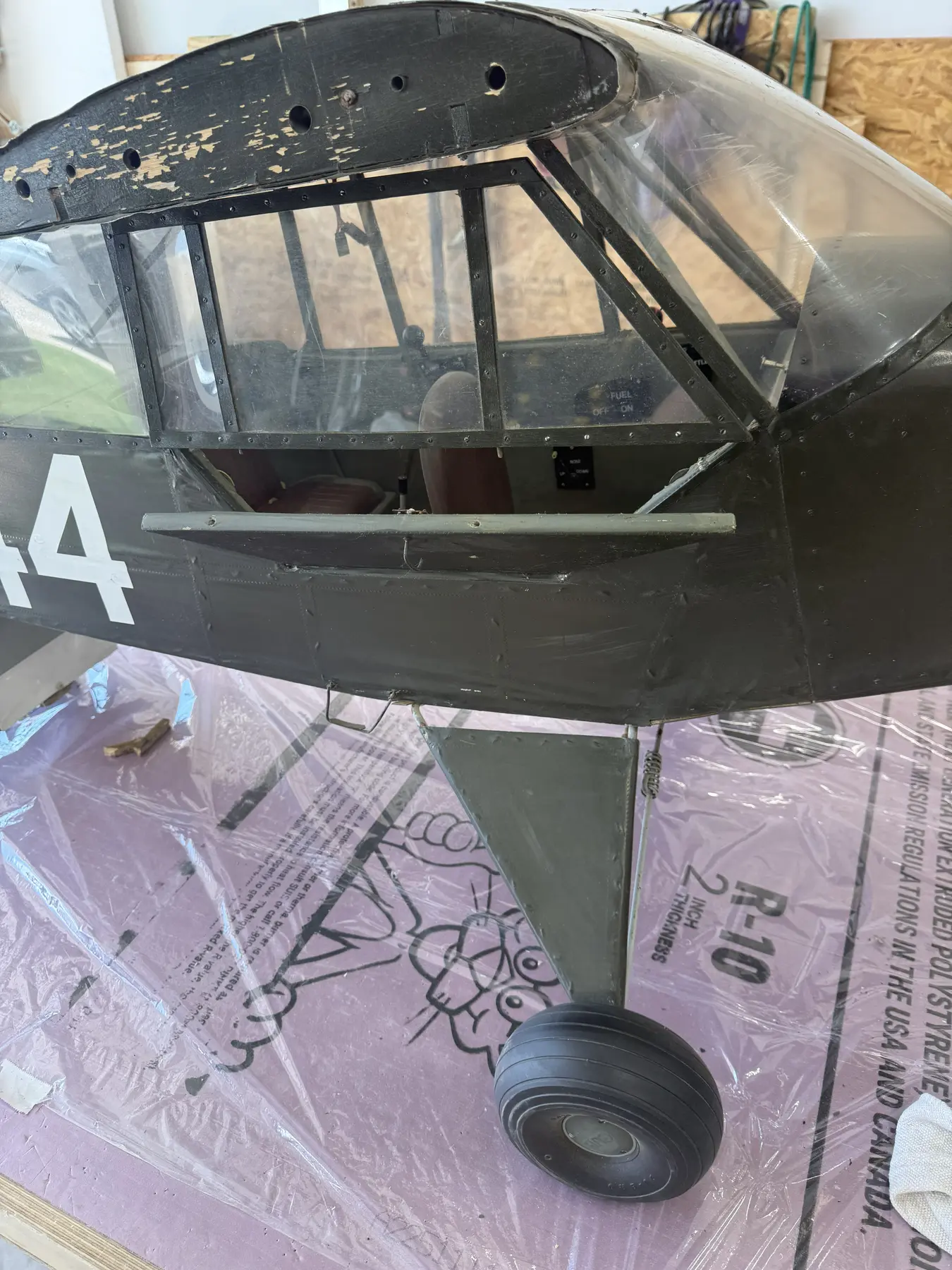
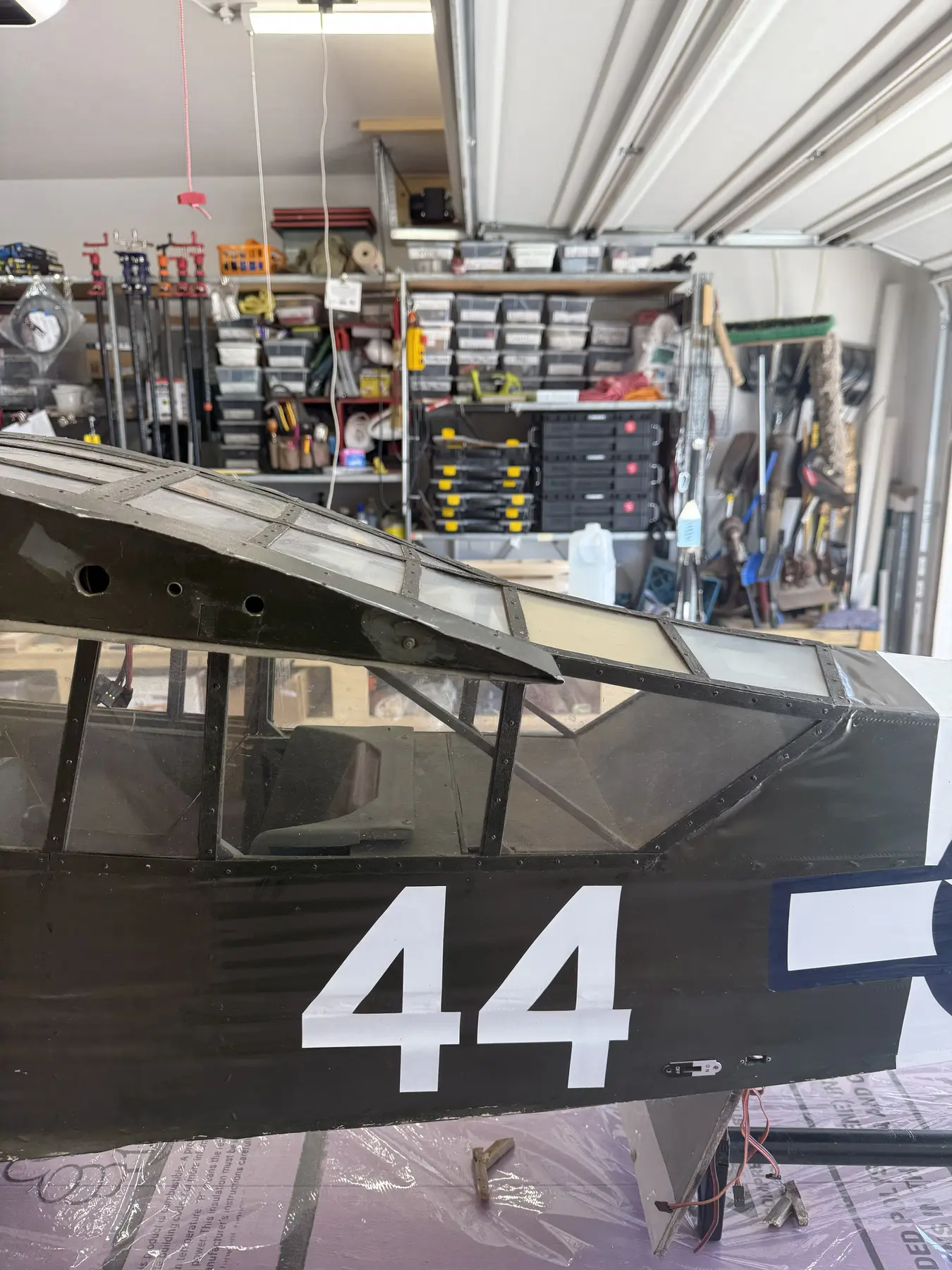
Exterior and interior views preserve the glazing, frame intersections, sight lines and cockpit relationships that the restoration must reproduce or deliberately improve.
The Existing Baseline
The greenhouse is not treated as a blank slate. The windshield, roof panels, side glazing, rear panels, door openings, framing members, retaining strips, hinge positions, latch locations, and existing mounting holes form a coherent, developed model installation.
Where those relationships are sound and serviceable, they remain. Where deterioration, fit, or weak attachment requires work, the restoration will reproduce the same relationship while improving durability and alignment.
Decision Framework
Sound greenhouse framework, major geometry, panel arrangement, openings, usable original fittings, and reliable attachment structure.
Windshield, roof, side, rear, door, trim, hinge, latch, screw, and retaining-strip relationships documented from the aircraft.
Clearer glazing, stronger hardpoints, cleaner alignment, positive miniature latching, controlled sealing, and easier future service.
Cracked or loose framing is corrected without replacing sound surrounding structure.
A frame, panel support, hinge mount, or latch hardpoint is remade only when the original cannot be trusted.
Historical references may refine appearance, but they do not automatically override the developed model configuration.
Before Anything Moves
Every original glazing panel, aluminum strip, screw pattern, hinge, latch, door, window, frame junction, and attachment point is photographed before removal. Each piece is labeled for side, position, orientation, and relationship to neighboring parts.
Original glazing may be cloudy, scratched, cracked, or poorly fitted and still remain valuable as a full-size cutting and drilling template.
Approved Glazing
The restoration standard uses 0.040-inch clear PETG for the windshield, greenhouse roof, side panels, rear panels, and door glazing. The common thickness supports a consistent appearance, durable handling, reliable fastening, and repeatable replacement patterns.
A thinner sheet will be considered only if a specific curved panel cannot be fitted faithfully in 0.040-inch PETG without distortion or excessive stress. That exception must be demonstrated by the actual panel—not assumed in advance.
Forming and Fitting
Panels are rough-cut oversize, trial-fitted, and trimmed gradually. The aircraft and retained originals control the shape. Heat is used only where necessary and only after a cold-fitting trial shows that the required curve cannot be achieved cleanly.
Mounting holes are transferred after the panel lies naturally against the frame. The PETG is not pulled into alignment by screws, because that would lock stress into the glazing and invite cracking, distortion, or loosening later.
Doors and Windows
The received aircraft's door and window arrangement remains the model baseline. Hinged pieces, fixed panels, openings, overlaps, and clearances are recorded before correction. Full-scale L-4 references are used to understand the appearance and function, but they do not justify unnecessary rebuilding of a workable model arrangement.
Door frames are made square and true before glazing is fitted. Gaps remain even, and the door must close without twisting the greenhouse.
Glazing, trim, hinges, and latches are checked through the full opening range before final fastening.
Doors and removable panels continue to provide useful access to the cockpit and concealed modern systems.
Hinges, Latches, and Trim
Existing hinge locations, retaining strips, fastener patterns, and latch evidence are the starting references. Straight, sound original aluminum glazing strips are cleaned and reused. Missing or damaged pieces are replicated to match their neighbors.
Miniature latches must positively retain the doors and windows against vibration and airflow. Decorative hardware that only appears closed is not sufficient for a flying giant-scale model.
Lower right door investigation
The complete door provides context; the disassembled views show why the latch support could not simply be hidden and reused.
The lower right door and its latch relationship were photographed before and during disassembly. Once opened, the support area showed deteriorated wood that needed to be evaluated and prepared for a sound repair rather than covered by new hardware.
These photographs establish the condition and the investigation stage. They do not claim that the latch support has been rebuilt, that final hardware has been installed, or that the door has completed its operational checks.
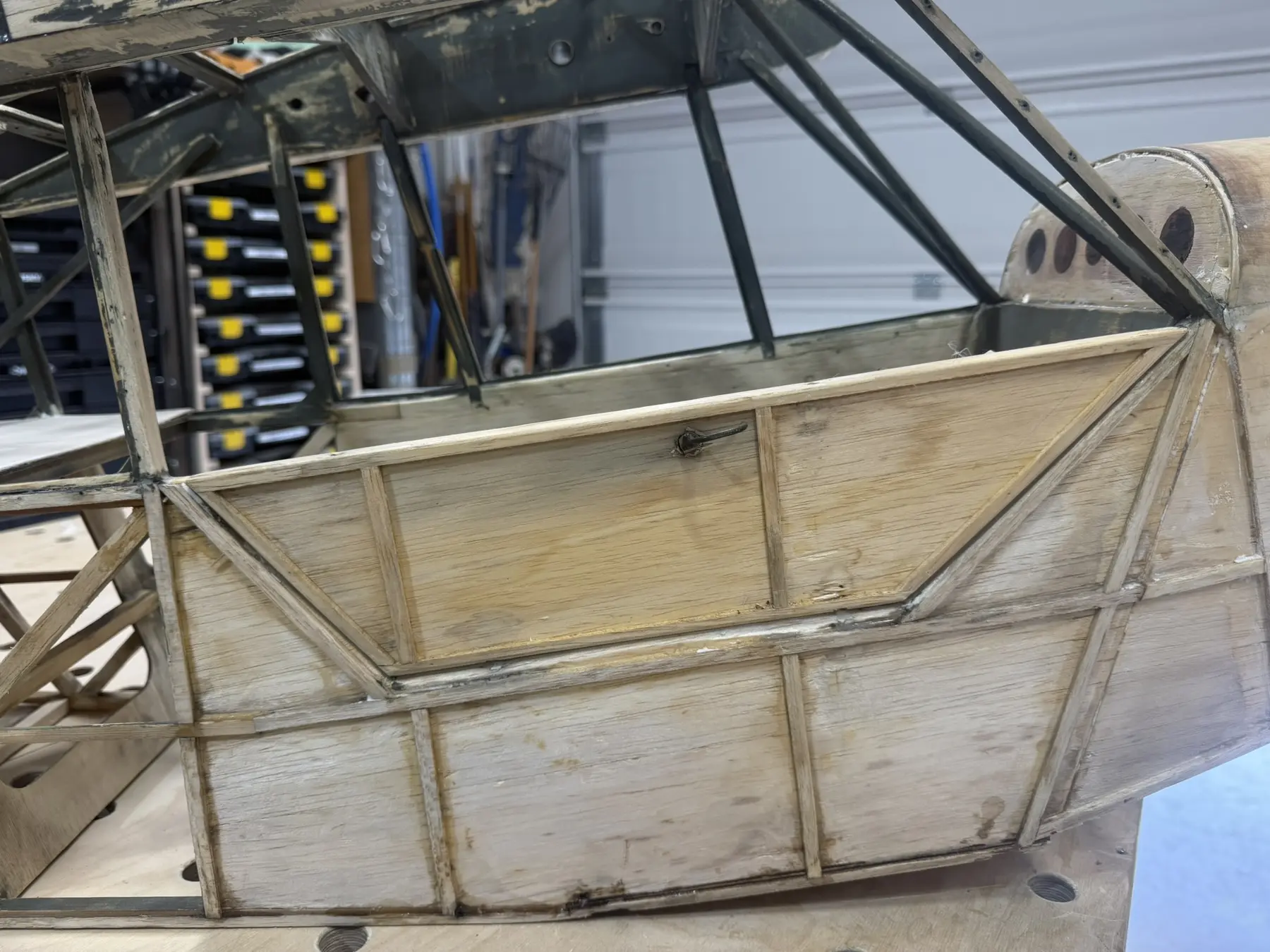
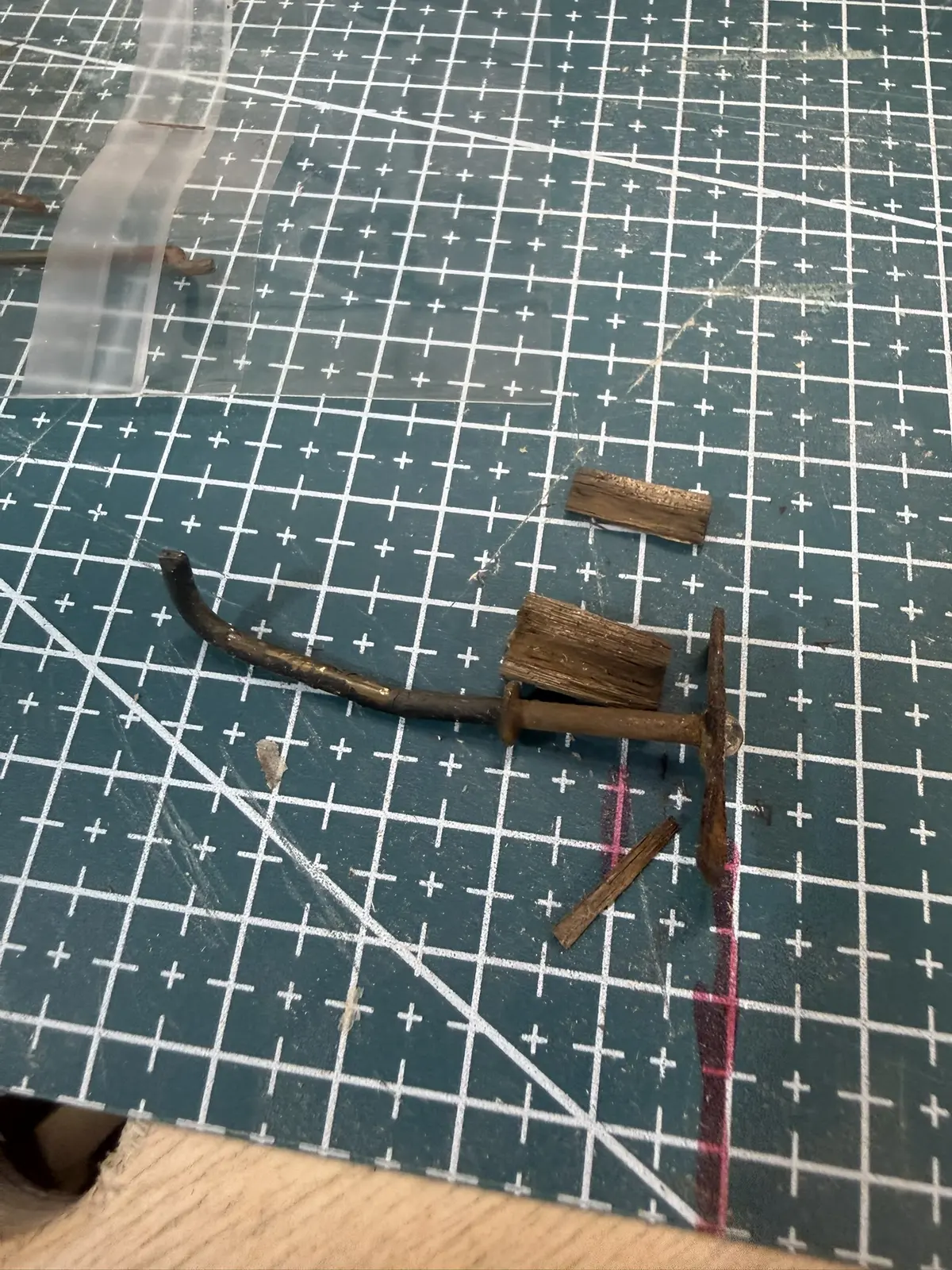
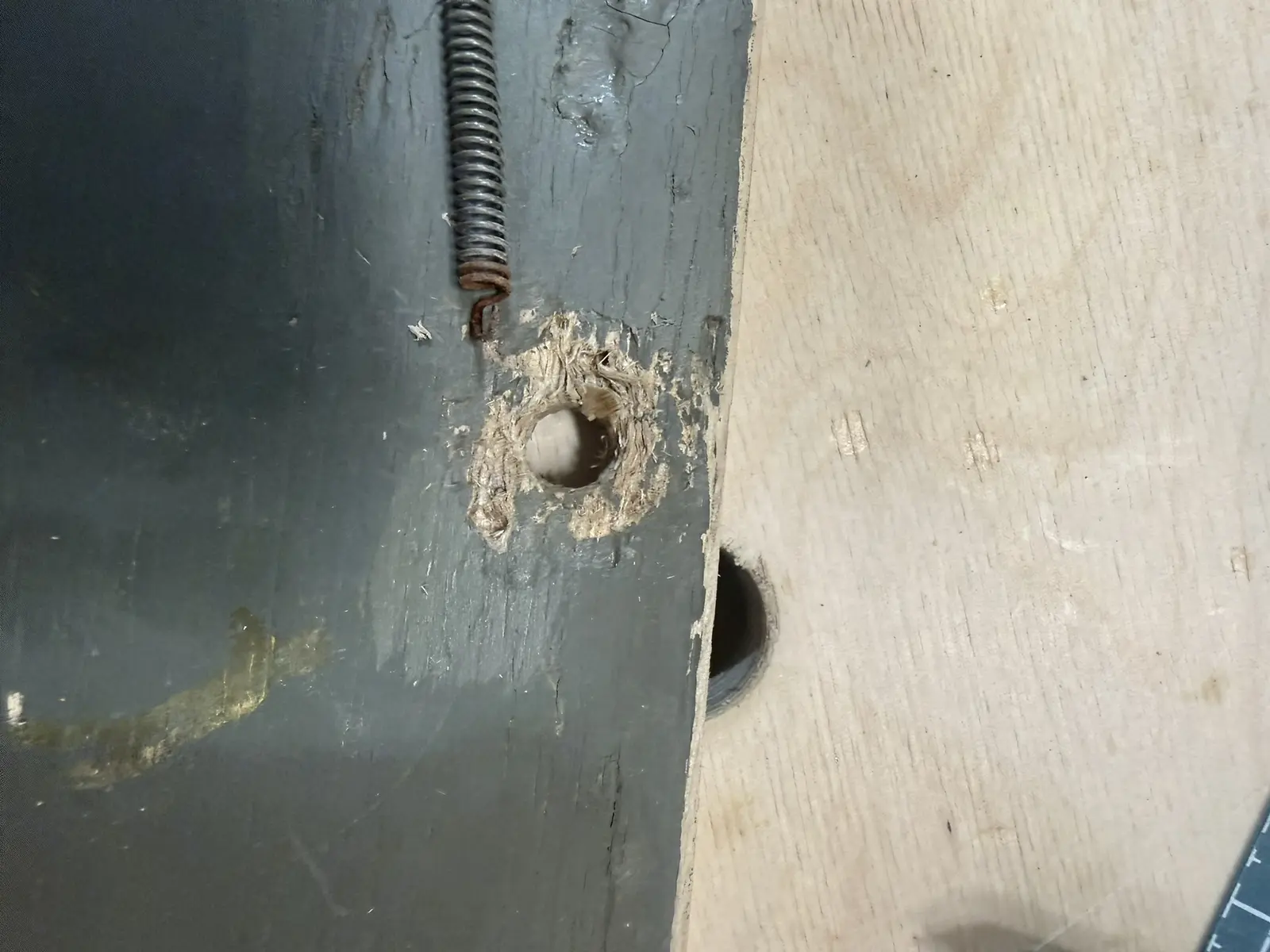
Current stateInvestigated, documented and prepared for repair. Completion remains open pending rebuilt support, final latch installation and full-range operation checks.
Installation Sequence
The greenhouse framing, door alignment, hinge geometry, latch hardpoints, cockpit access, covering edges, paint boundaries, and trim relationships are completed before final glazing installation.
Protective film remains on the PETG as long as practical. Final cleaning and inspection happen only after drilling, trimming, painting, and surrounding construction are complete.
Historical Truth Standard
Existing model configuration describes what was physically present when the aircraft was acquired.
Historical reference describes full-scale L-4 construction and appearance.
Restoration decision records what is preserved, replicated, enhanced, repaired, or rebuilt on this model and why.
Model-specific framing and door details will follow the best available full-scale references while respecting the existing airframe.
Completion Standard
Clean transparent panels, consistent framing, neat retaining strips, and no obvious distortion or trapped debris.
Doors and windows open, close, and latch without binding, twisting, or placing stress into the greenhouse.
All hardware is secured, fasteners are backed, PETG is protected from crushing, and removable access remains practical.
Continue the Story
The completed greenhouse standard locks the cabin geometry, access, doors, glazing, and trim relationships before covering and final finish. The next visitor chapter will follow the coordinated rebuilding of the lower fuselage, belly access, landing-gear load paths, cockpit supports, firewall, and nose module.
Return to the Journey