The Flight Line is where design intent stops being theoretical. Before an aircraft earns a maiden, it must survive inspection, configuration review, power checks, control checks, range testing and deliberate failure testing. After it flies, the record changes again: what actually happened becomes more important than what we expected.
Operational evidence begins with the aircraftJon's Carbon Cub S2 at the field.
Current L-4 stateRestoration and systems integration; not presented as flight released.
Current 1/4 Cub stateBuild and pre-covering hold points remain active.
Telemetry roleOperational awareness, diagnosis and post-flight analysis.
Primary ruleNo maiden, taxi or flight claim without evidence.
At the field
One aircraft is already earning real flight experience.
The Carbon Cub is the practical bridge between simulator work, assisted flight modes, telemetry awareness and the much larger aircraft still moving through restoration and release gates.
Carbon Cub S2 at the flying fieldJon's aircraft · existing flying-aircraft record
The release philosophy
Flying is the last step, not the next step.
A finished-looking airplane can still be an unfinished system. The Flight Line treats release as a sequence of gates. Each gate asks whether the airplane is ready for the next increase in consequence.
01 · Structure
Controls, hinges, fasteners, retention, landing gear, hatches and anything hidden by covering are inspected and documented.
02 · Systems
Receiver architecture, flight-control power, propulsion, accessories, wiring, antennas and telemetry are checked as separate failure domains.
03 · Bench
Direction, endpoints, rates, failsafe behavior, power-path independence and sensor sanity are verified with the propeller removed whenever practical.
04 · Ground
Only after bench release: assembled-aircraft checks, range/interference testing, propulsion run-up, restraint, steering and taxi work as appropriate.
05 · Maiden
Only when the aircraft-specific release record closes the required gates. The website does not imply a maiden merely because a model looks complete.
06 · As flown
Trim, temperatures, current draw, RF/link behavior, battery use, handling notes and defects become the new operational evidence.
Current aircraft status
What is actually ready today?
Restoration subject · not the current as-flown aircraft
Restoration in progress
1/3-scale L-4 Grasshopper
The L-4 remains in restoration, fabrication and systems integration. Propulsion, receiver architecture, servo selections and physical installation work are still being completed before ground and flight testing.
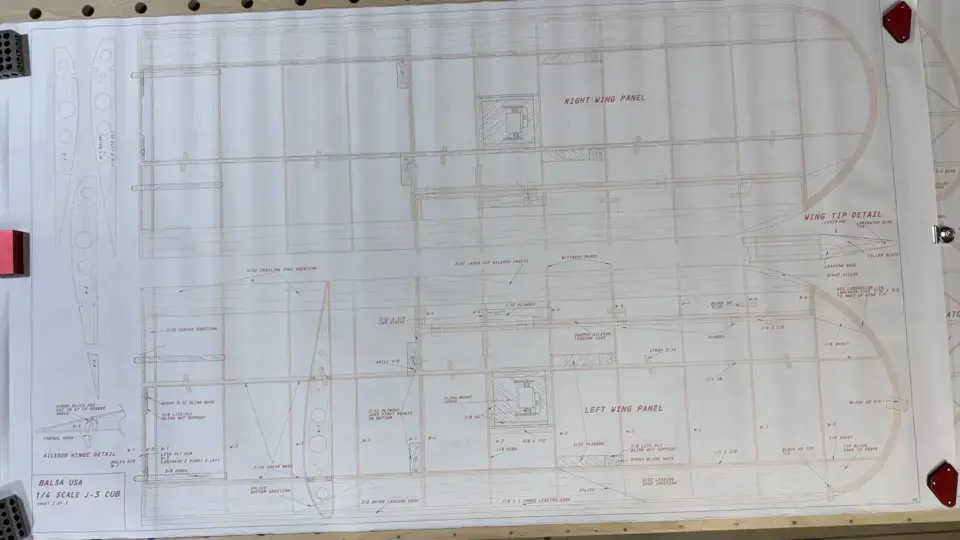
The Cub remains a build in progress with explicit pre-covering hold points. Before structure is closed, service access, controls, wiring, lighting, antennas, telemetry, pitot routing, strain relief, cooling, battery restraint and photographic documentation all need to be closed deliberately.
The Carbon Cub is Jon's practical return-to-RC and training aircraft, connecting SAFE-assisted flying, simulator practice and early telemetry experience.
The 1/4 Cub work established an especially useful principle: serviceability and documentation are release items, not cosmetic extras. Closing structure should happen only after hidden systems can still be understood later.
Structure before closureThe L-4 remains open for inspection, repair and systems work; this is restoration evidence, not a release state.
Power-domain separation, connector retention, strain relief, labeling, service loops and routing.
RF
Receiver/antenna location, separation, orientation and future access.
Telemetry
Sensor allocation, installation, calibration path and service access—not merely ownership.
Air / pitot
Routing, protection and access before fabric makes troubleshooting expensive.
Cooling / batteries
Restraint, airflow, thermal monitoring and CG consequences verified in the physical airplane.
Evidence
Photographs of hidden structure and routing before it disappears.
If a hidden system cannot be inspected, diagnosed, replaced or understood later, the installation is not finished merely because it fits.
Bench-to-field progression
Increase consequence one step at a time.
Bench electronics
Prop removed
Programming, channel mapping, control direction, endpoints, flight modes, warnings and most failover tests belong here first.
Power-system component
Power-path tests
Deliberately remove one intended power path at a time and verify what remains alive. Redundancy is only meaningful when the surviving path is demonstrated.
Range and interference
Test the assembled aircraft in representative configurations. Antenna placement is an aircraft installation problem, not merely a receiver specification.
Propulsion run-up
Verify vibration, cooling, restraint, motor/ESC behavior, connectors and logging before flight. Propeller selection remains evidence-driven.
Field preparation · not a taxi or release claim
Taxi
Ground handling can expose steering, brake-free wheel alignment, gear, vibration and control issues—but taxi is recorded only after it actually occurs.
Maiden card
When a giant-scale aircraft reaches release, the maiden record should capture configuration, CG, rates, batteries, prop, weather, pilot notes and defects.
Telemetry
Useful after the adrenaline wears off.
Telemetry is not primary flight authority in Jon's Hangar. Its value is helping the pilot notice a meaningful problem and helping the builder understand the flight afterward.
Bench power evidenceCharging, analysis and connector work belong in the documented setup—not in assumptions.Existing installation evidenceExposed L-4 wiring is documented while access remains possible.
In-flight awareness
Receiver/control voltage, RF/link quality, propulsion voltage, selected temperature and other warnings can support decisions without replacing visual aircraft control.
Post-flight diagnosis
GPS path, altitude, airspeed when properly calibrated, battery use, temperatures and link data can explain a flight much better than memory alone.
Evidence state
Owned sensors are not automatically allocated, installed, calibrated or operational. Those states remain separate until the aircraft record proves them.
First-flight philosophy
The maiden is a test flight, not a ceremony.
The objective is not to prove that every design decision was right. It is to expose problems at the lowest practical risk, gather clean evidence and return with an airplane that can be improved.
Before launch
After landing
Confirm current configuration—not the configuration from an old document.
Record trim changes before memory fades.
Verify CG, control directions, rates/expo and failsafe.
Inspect structure, gear, prop, motor mount, connectors and hot spots.
Confirm battery identity, charge state and restraint.
Review telemetry/logs and compare against expectations.
Use a simple flight plan focused on controllability and systems.
Open defects and decisions rather than normalizing surprises.
As-flown configuration
The aircraft that flew becomes the authority.
Each flight record preserves the aircraft's as-flown configuration. Later equipment or setup changes begin a new configuration record.
planned → built → released → as-flown → inspected → changed → re-released
This makes later tuning understandable. A new propeller, CG shift, servo-rate change, receiver change, battery arrangement or cooling modification should be tied to the flight record that motivated it.
Field records
What this room will grow into
Release checklists
Aircraft-specific inspection and configuration-control records.
Maiden reports
Date, field, configuration, weather, objectives, observations and defects—only after a real maiden.
Telemetry stories
Selected graphs and explanations that answer a useful question rather than dumping data.
Video and FlightVision
Field video, spectator imagery and post-flight storytelling while line-of-sight pilot control remains primary.
Tuning history
Rates, expo, CG, propeller and system changes connected to actual flight observations.
Maintenance findings
What inspection after flying taught us and what changed before the next release.
Across the Hangar
Trace the flight back to the build.
Aircraft Bays
Project-specific construction, restoration and current configuration.