Learn the airplane
Build the kit, improve the work, rebuild pieces when needed, and let construction skill return through the project rather than pretending it never went away.

Active Giant-Scale Build · Aircraft Bay
A Balsa USA Cub being shaped around the qualities that made the type worth loving in the first place: floaty handling, grass-field usefulness, a big prop working at modest speed, long useful flights, and enough authority to fly with confidence without turning the airplane into something it is not.
The Build
The kit began as a return to giant-scale building and a logical step beyond the Carbon Cub. As the project matured, the question stopped being “what motor fits?” and became “what kind of Cub do I actually want to own, fly, service and understand for years?”
Build the kit, improve the work, rebuild pieces when needed, and let construction skill return through the project rather than pretending it never went away.
Long flights, big wheels, low-speed confidence and conventional Cub aerobatics matter more than headline speed or unlimited vertical performance.
Old radio, motor, ESC, covering and finish “locks” remain useful history when they explain how the design evolved. They are not allowed to overrule later decisions simply because the word LOCKED appears in an old file.
Aircraft Mission
The goal is a large Cub that feels light on its feet, gets off grass confidently, carries useful reserve for climb and go-around, cruises comfortably at partial throttle, and still has the control and power for hammerheads, stall turns, large loops and ordinary sport-scale aerobatics.
Floaty handling
Large / tundra wheels
Long useful flight duration
Strong takeoff and climb authority
Basic aerobatics without a 3D mission
Moderate extra weight accepted when it buys reliability or capability
Physical power-system study
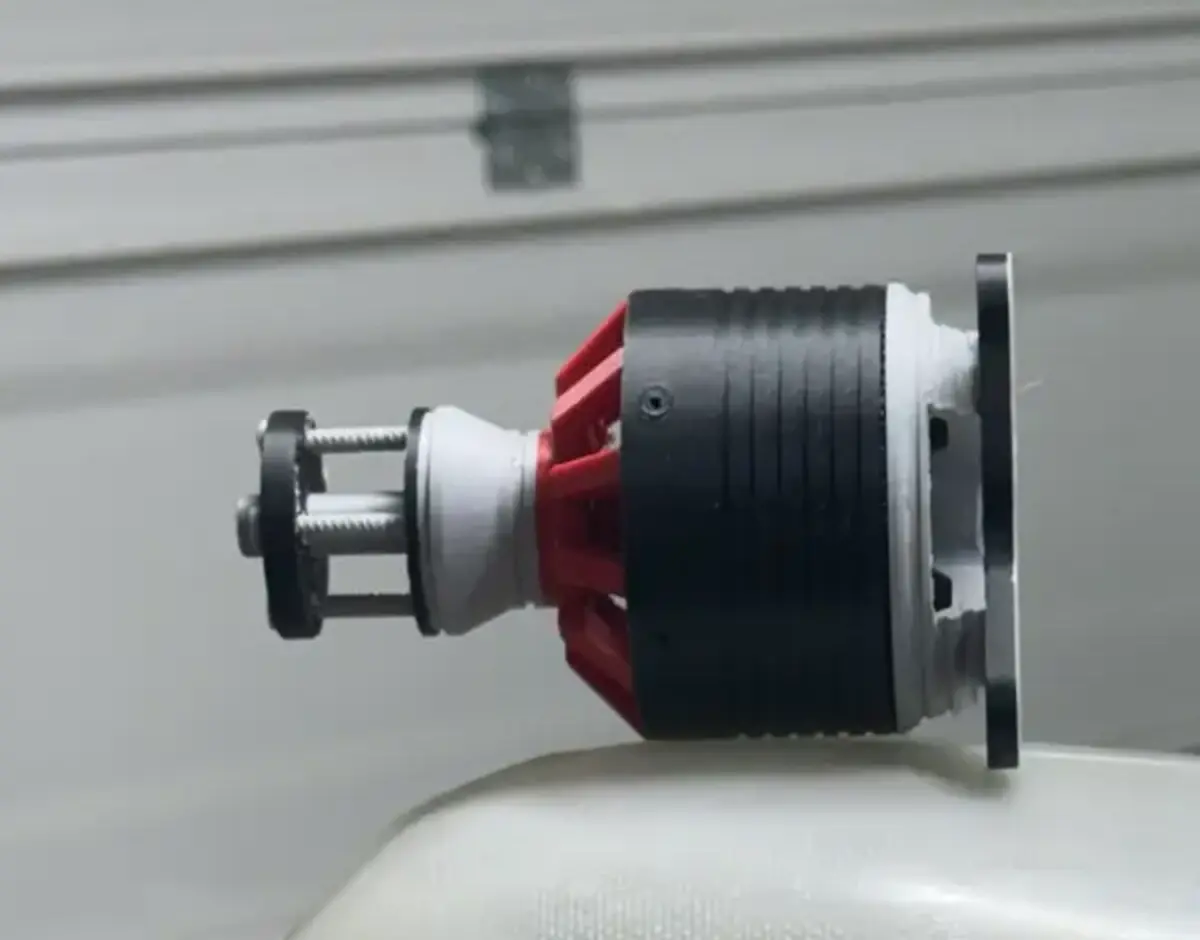
The 3D-printed BadAss BA-6230-205Kv mock engine was made to support the quarter-scale J-3's power-system planning. It was briefly placed on the larger L-4 only to judge its physical size; that comparison did not make it an L-4 propulsion choice.
Decision Evolution
Several technically reasonable systems were explored. Some were later superseded by mission clarity, availability, economics, telemetry needs or the desire for more useful margin. Each study helped sharpen the current direction.
Systems Architecture
Even as radio hardware changed from early Spektrum ideas through the RadioMaster/ELRS “Fort Knox RF” phase and finally into the FrSky Tandem ecosystem, the durable engineering ideas survived.
Propulsion loss must not remove flight controls. Accessory failure must not brown out the flight-control system.
FrSky Tandem X20R, ETHOS and RB25S are the current foundation. Exact receiver combination remains open.
Left/right elevators, ailerons and flaps are treated independently; no flap Y-harness is part of the current architecture.
Hitec D646WP ×6 for elevator/aileron/flap roles, D845WP ×1 for rudder, plus Savox SH-0255MG ×1 for tow/auxiliary service.
Used for awareness, diagnostics and post-flight engineering — not as primary flight authority.
Recording and spectator/post-flight storytelling are accessory functions. They do not get authority over the control or RF system.
Covering, Lighting and Presentation
The Cub should look believable at a glance and reward a closer look. The same philosophy applies to fabric, lighting and the developed USA 250th concept: thoughtful detail without turning the airplane into a visual stunt.
Before the covering closes
Hidden systems are treated as future maintenance problems unless access, labeling, strain relief, photographs and replacement paths are designed before the fabric closes the structure.
Control linkage access
Servo hatches and wing service bays
Lighting disconnects
Receiver and antenna routing
Pitot / telemetry routing
Battery restraint and cooling
FlightVision access
Photograph before covering
Current Truth
The site deliberately refuses to turn recommendations, purchases or design studies into installation claims.
“The result is not a history of bad decisions. It is a record of progressively better questions.”
The project record preserves the older RadioMaster/ELRS, Scorpion, SeaKing, 8S/10S and covering/finish studies as real history without allowing them to outrank the current governed BUSA decisions.